
oil on canvas
60 × 90”
2011

Christmas Lights and Mirror Ball
oil on canvas
60 x 49”
2011

oil on canvas
54 x 60”
2010

The Stag and the Hound
oil on canvas
50 x 80”
2009

After Morandi
oil on canvas
30 x 32”
2009

oil on cavnas
21” x 18”
2008
private collection

oil on canvas
72 x 46”
2008

oil on canvas
70 x 135”
2008
Private Collection

oil on canvas
40 x 60”
2007

Sailing Away
oil on canvas
60 x 50”
2007
Private Collection

oil on canvas
40 x 60”
2007
collection of Ruth Baguskas

oil on canvas
60 × 90”
2006
Private Collection

oil on canvas
36 × 36”
2006

oil on canvas
36 × 36”
2005

oil on canvas
60 × 50”
2004

oil on canvas
42 x 38”
2003

oil on canvas
50 × 80”
2002

Returning
oil on canvas
40 x 60”
2001

Black Hollyhocks
oil on canvas
60 x 50”
2001

oil on canvas
70 x 60"
2000

oil on canvas
60 x 40”
1999

oil on canvas
60 x 50”
1999
Collection of Patrick & Maureen Dore

oil on canvas
70” x 50”
1997

oil on canvas
40” x 60”
1996

oil on canvas
50 × 80”
1995

oil on canvas
60 x 60”
1995
Originality, a poem by Harriet Shorr.
Writers scribbling through years,
Small black lines and curlicues
Became lovers, robbers,
Mothers and soldiers,
The trees and rivers they wandered among,
Their dresses and ties,
Written streets, avenues, parks,
Greed, joy, anguish.
Words, more words than stars.
Write about place
Never described,
Write about encampments,
Under those trees,
Along those rivers.
Write about longing there.

oil on canvas
60 × 50”
1994

oil on canvas
38 x 25”
1993

oil on canvas
40 x 50”
1993

oil on canvas
30 x 40”
1991
Collection of Swarthmore College

oil on canas
70 x 135”
1991
Private Collection

oil on canvas
66 × 56
1991
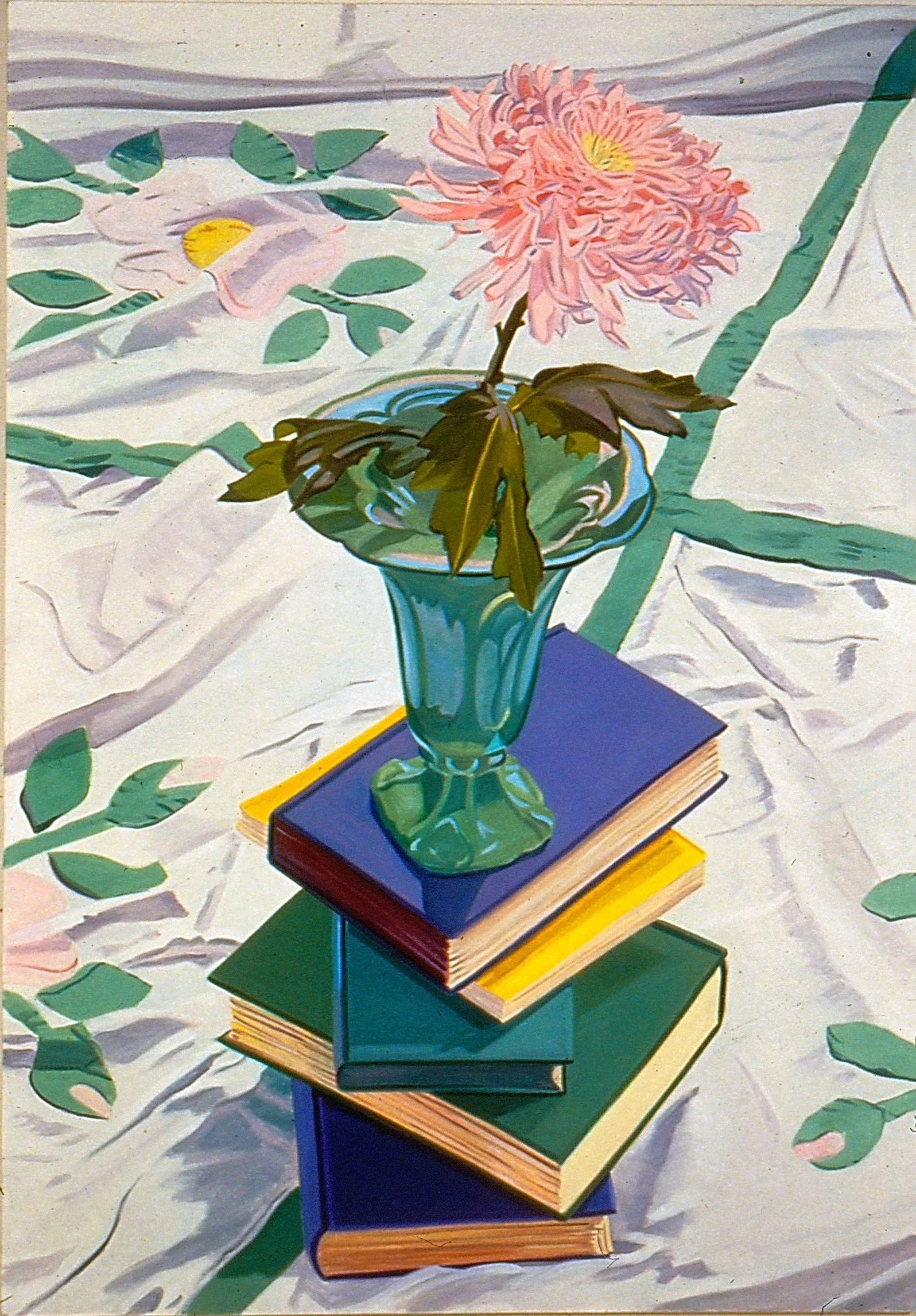
oil on canvas
66 × 46”
1990

oil on canvas
40 × 60”
1990

oil on canvas
60 × 90"
1990
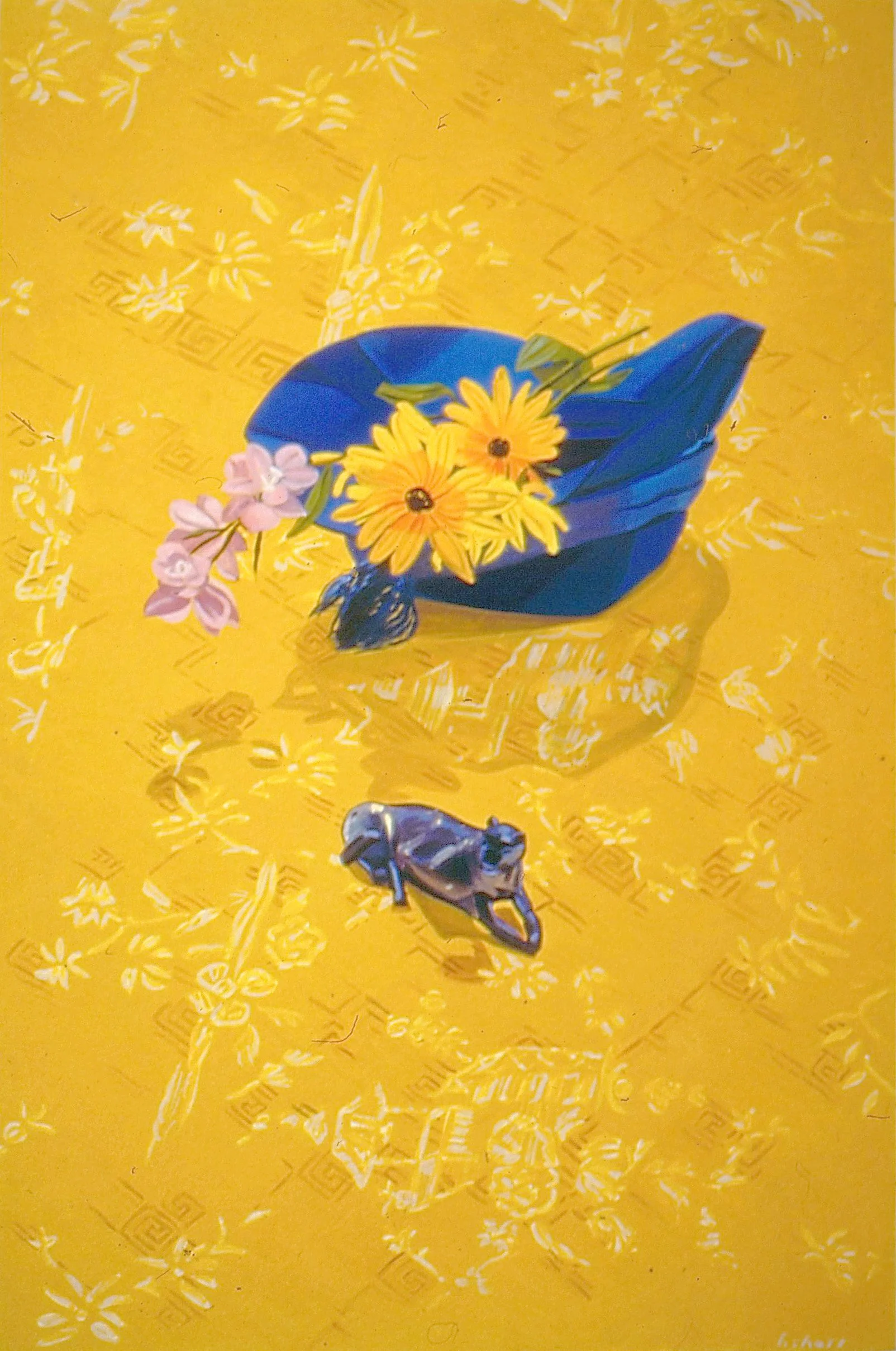
oil on canvas
60 × 40”
1989
“A bright cloth throws color up into the darker surfaces of reflecting objects, creating hues that are subtle mixtures of the color of the object and the color of the cloth.”
Harriet Shorr
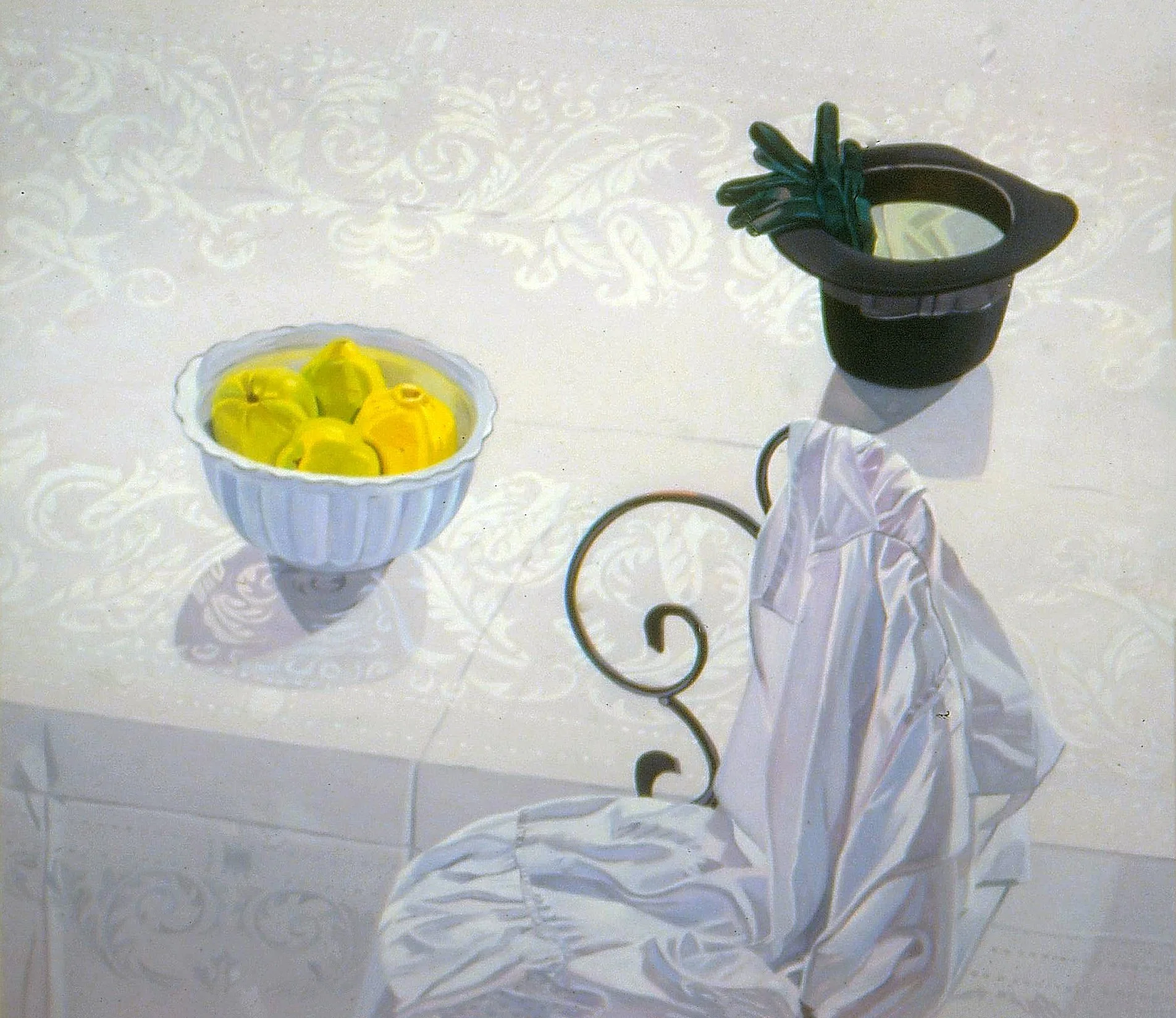
oil on canvas
80 × 70”
1988
“In Fantin Quince’s the colors on the inside of the bowl changed as the sun moved across the sky. I incorporated several different moments because I didn’t want to give up one color for another.”
Harriet Shorr, The Artist’s Eye: A Perceptual Way of Painting.
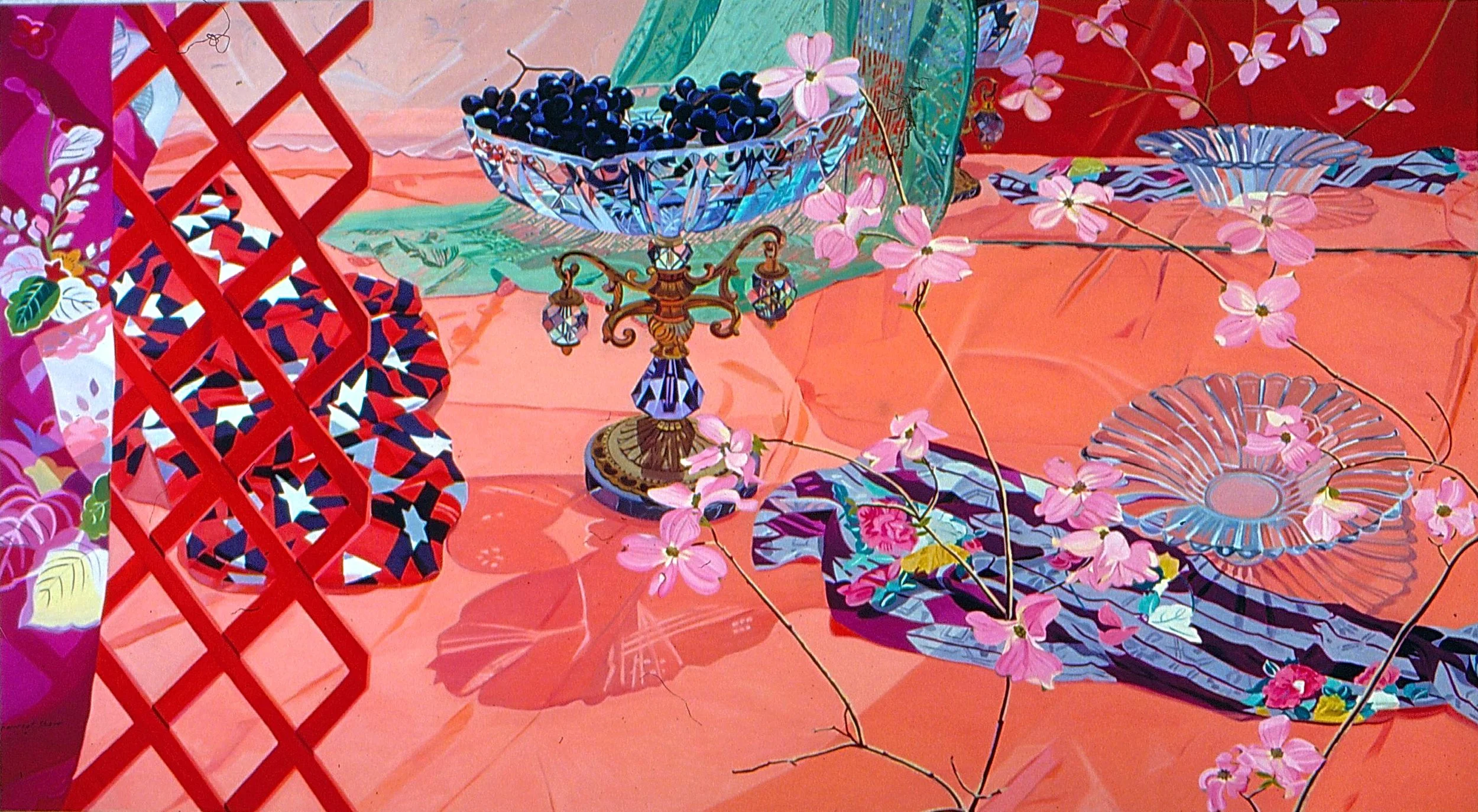
oil on canvas
70 × 135”
1988
“Objects in this space, enlarged and set in a field of strongly saturated color, are free to become actors, icons, metaphors.”
Harriet Shorr, The Artist’s Eye: A Perceptual Way of Painting.
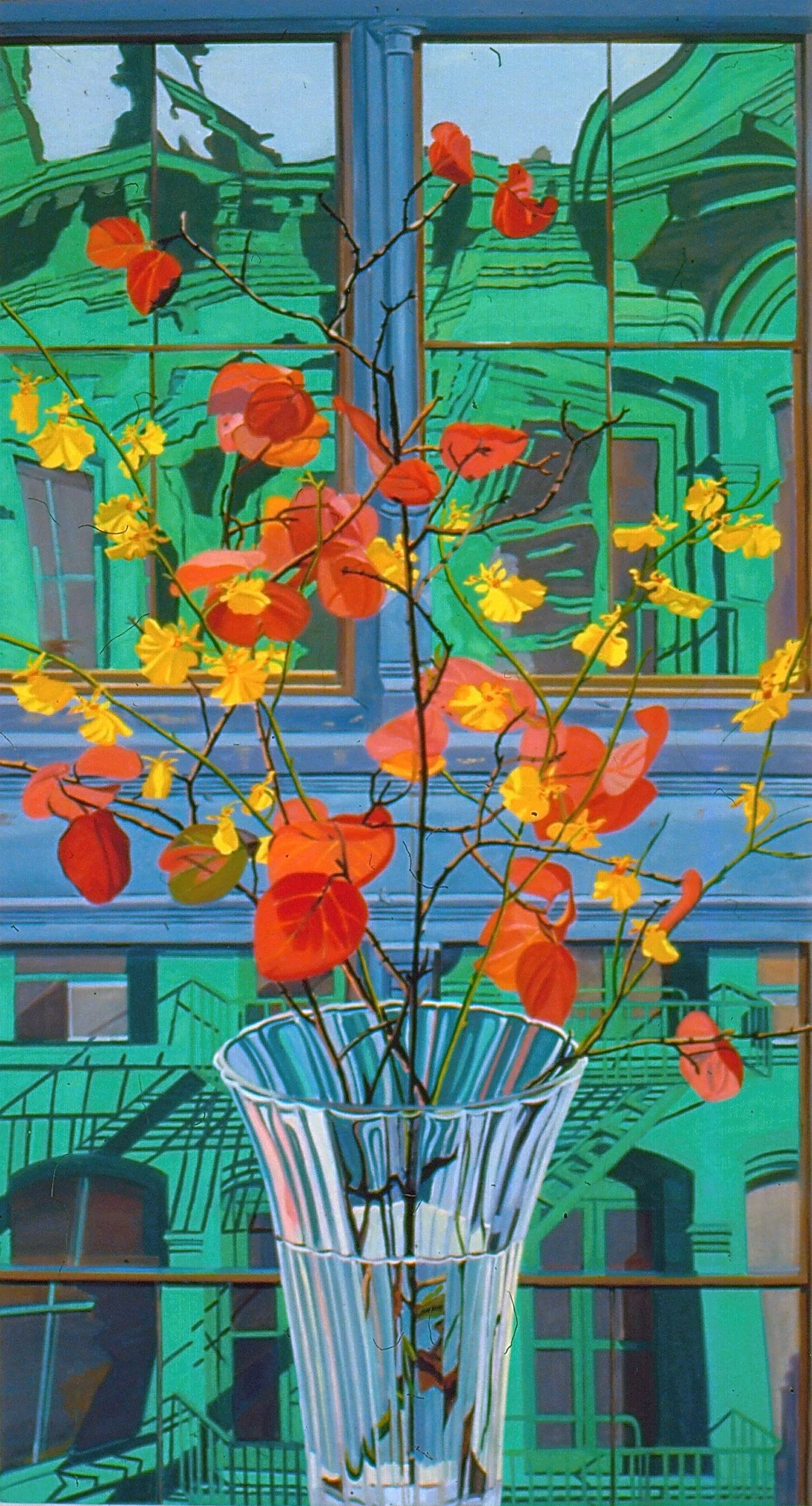
oil on canvas
70 × 40”
1987-88
“Looking out the window, past a vase of autumn leaves, I saw the window of the building across the street reflecting the brilliant greens of a building next door to me. I composed the painting so that there was no architectural reference to the inside window. I painted a visual field that had no obvious clues to where things were. For me, the resulting image configures into the impression I saw, yet the ambiguities of distance are part of it.” Harriet Shorr, The Artist’s Eye: A Perceptual Way of Painting.

oil on canvas
50” x 40”
1987

oil on canvas
60 × 90”
1986
“For many years I had wanted to make a painting inspired by a description of Odette’s bedroom in Proust’s Swann in Love. Proust had described a lattice in the setting, so I bought some lattice and painted it gold. At the same time I wanted to divide the painting into a yin and yang side. This grew out of a private joke. Sometimes a potential collector would say that a painting was too feminine; another would say that it was too strong. The lattice with the kimono was the yin, or feminine, side of the painting; the little figurine and hat was the yang, or masculine, side. The orchids, occupying the middle, were a sensuous form, both yin and yang. As I arranged the still life, the head of the figurine—a Tang dynasty groom—fell off. I liked the space of the arrangement better with the head on the table, and although I knew it would invite further interpretation, I left it that way.
The light streaming in on the black velvet increased the drama and suggested the tone of a mystery. The private meanings are not necessary to respond to the drama of black, pink, celadon green, white, gold, and purple that establish the presence of the painting.” Harriet Shorr, The Artist’s Eye: A Perceptual Way of Painting.

oil on canvas
55 × 85”
1986
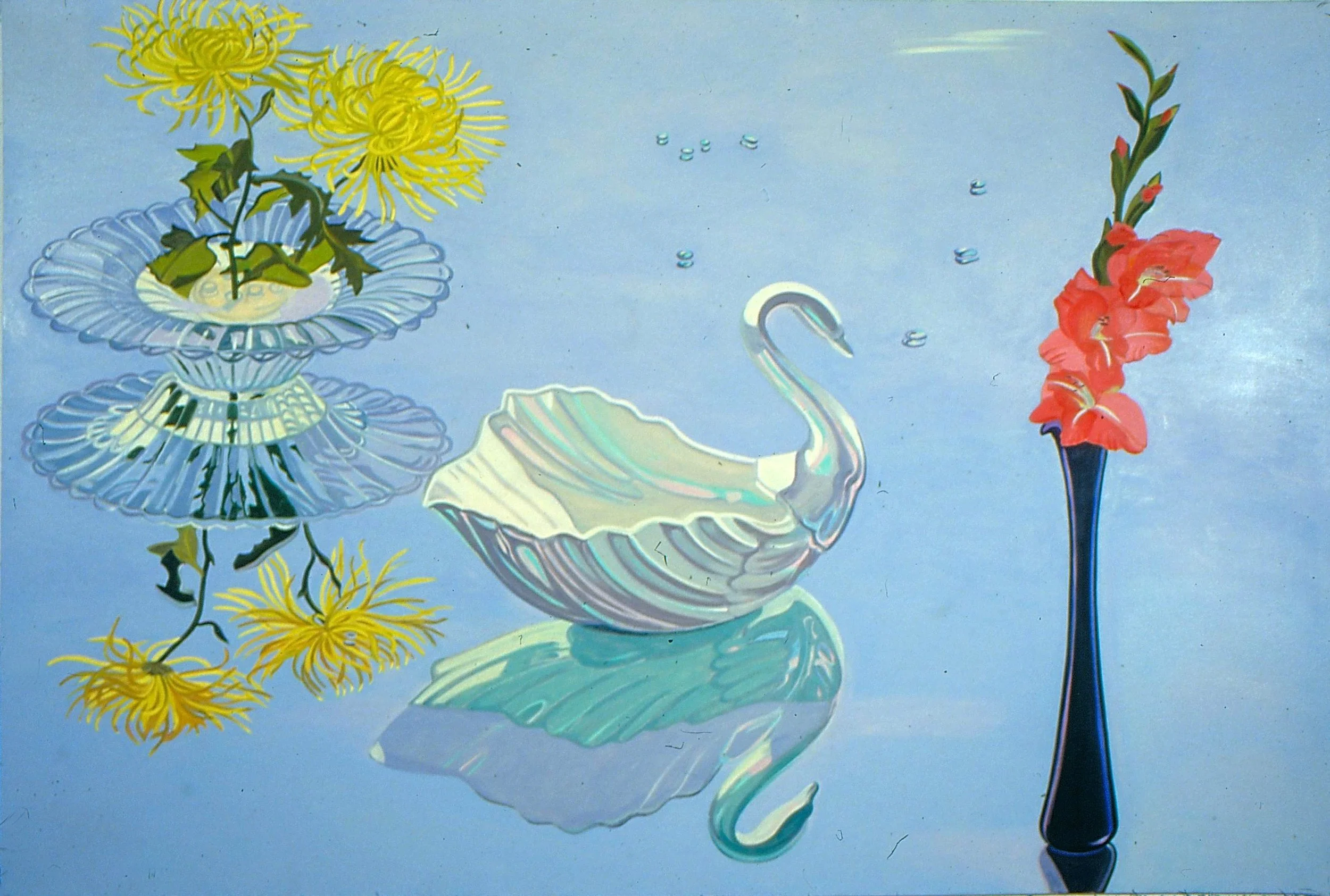
oil on canvas
60 × 90”
1985

oil on canvas
60” x 90”
1984

oil on canvas
60” x 60”
1983
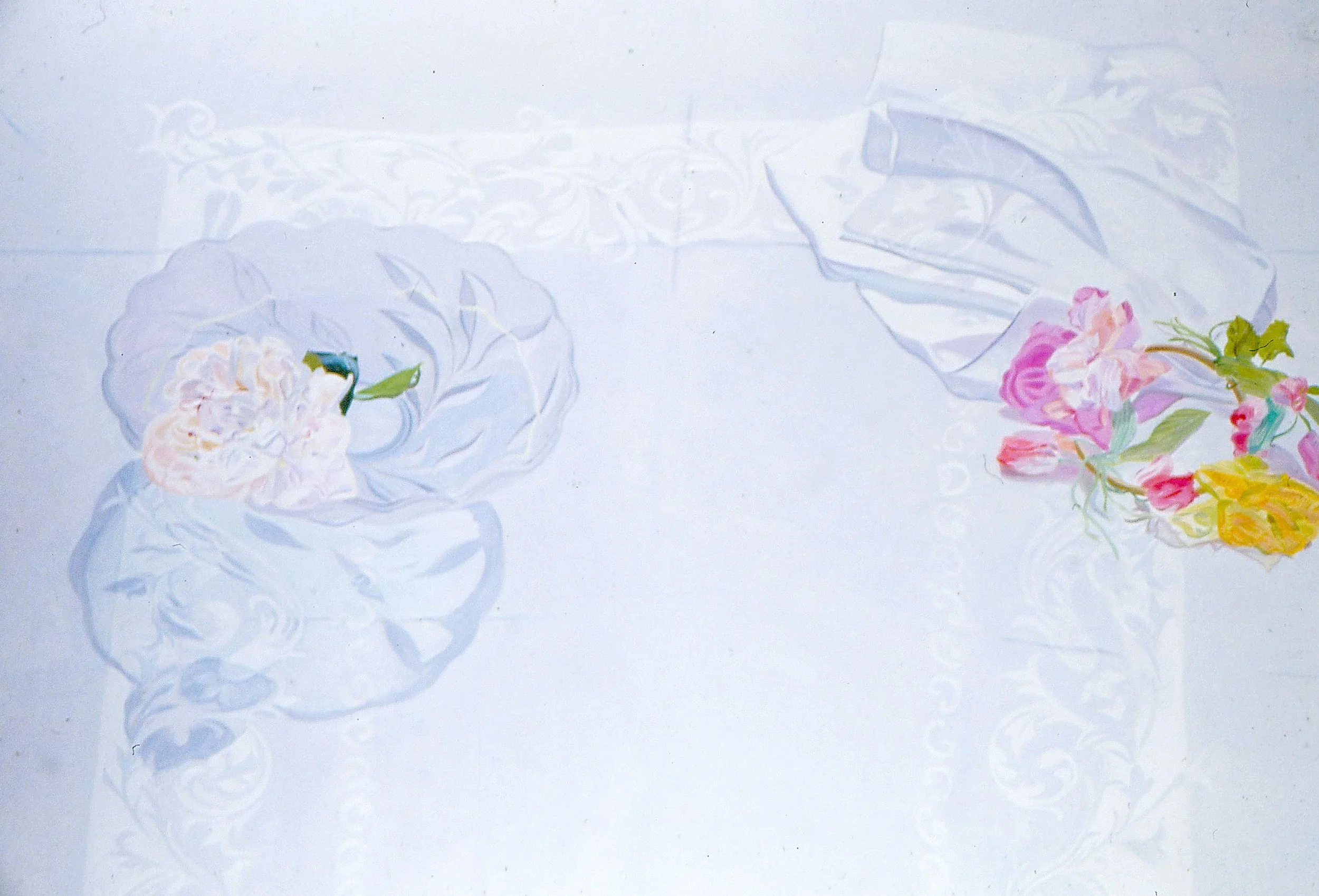
oil on canvas
60 × 90”
1982
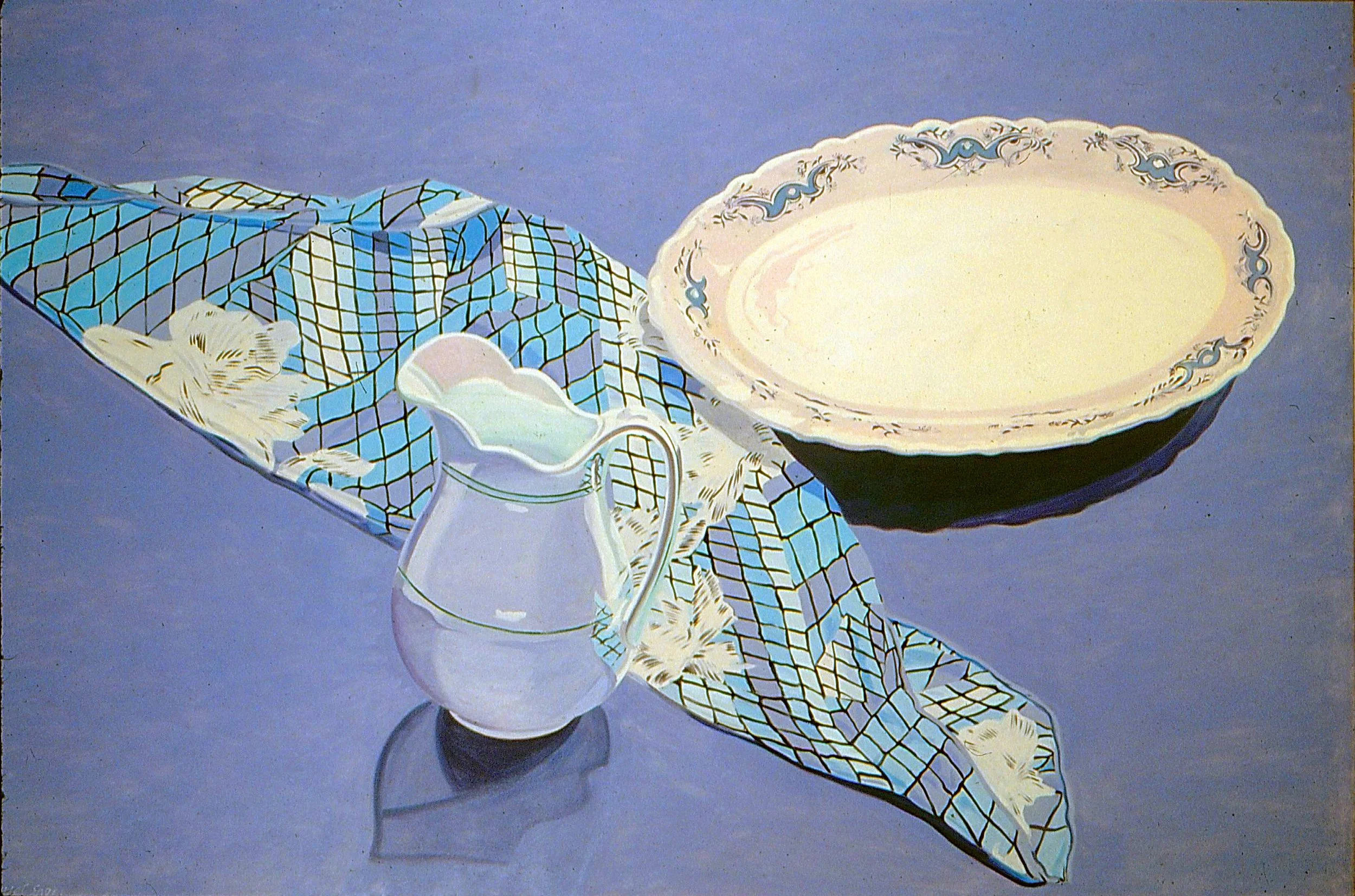
oil on canvas
60 × 90”
1982

oil on canvas
60 x 90”
1982
“I started a large painting with the fan and some artificial flowers, which I chose to enliven the space. My friend Jim Long brought home a balloon from a child’s birthday party, and I placed that in the painting. The associations of the fan and the balloon became a.. metaphor for movement…, and one that had come about serendipitously. Of course, if I hadn’t been thinking about movement, I wouldn’t have considered putting the balloon in the painting at all.
The color field of the painting becomes a space in which the associations between a few objects, drawn from different times and places, can exist. The color, in this case red, is the medium in which they are coexisting, even when their juxtaposition is unlikely.” Harriet Shorr, The Artist’s Eye: A Perceptual Way of Painting.
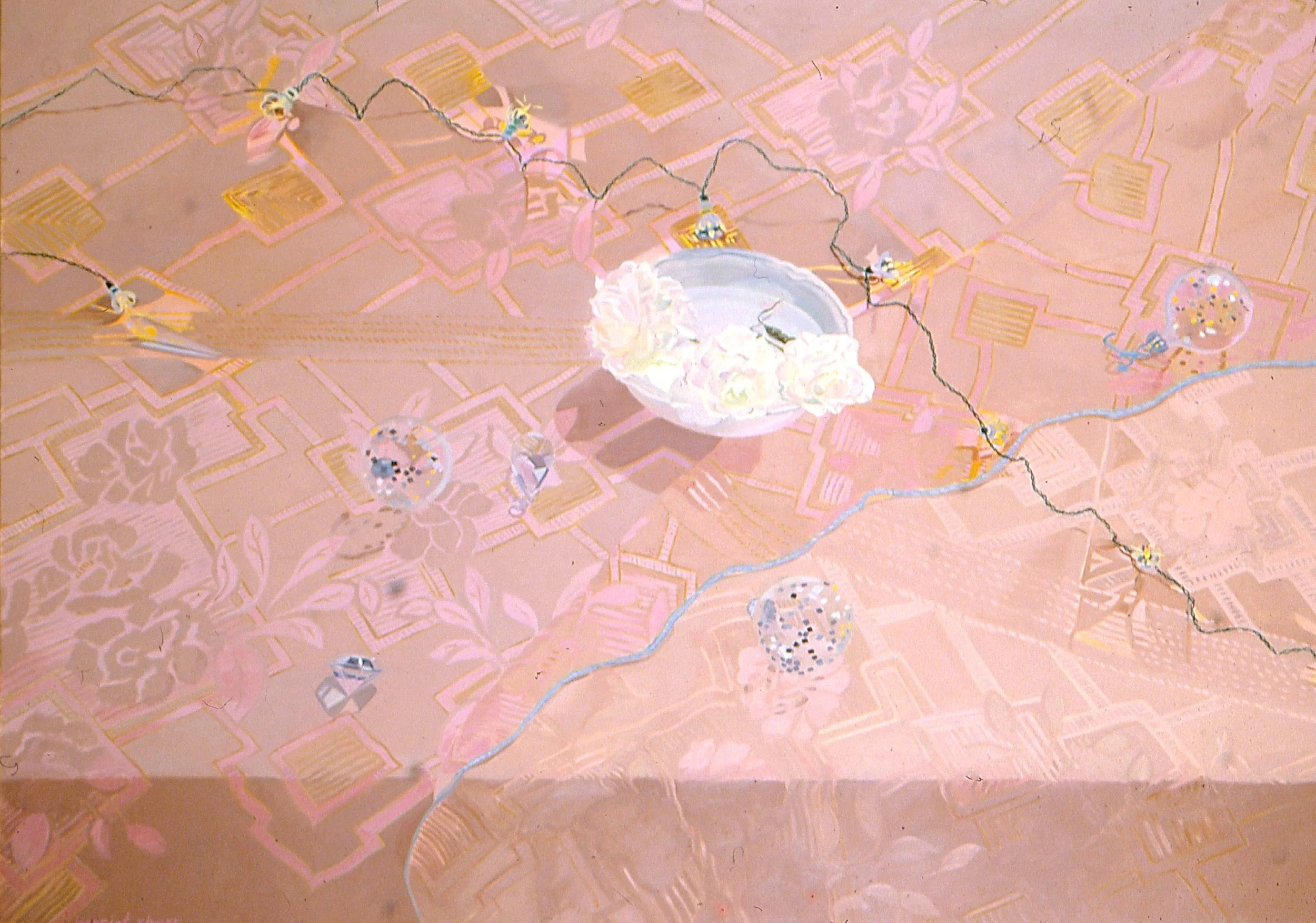
oil on canvas
60 × 90”
1982
“Certain subject matter posed a complicated technical challenge. If I was not satisfied with the way it had been represented, I painted it again. Such a subject was a string of Christmas lights. The first time I painted them I set them on a pale-colored ground. The lights were on, but the daylight was falling on the tablecloth, and although I painted the colors and values as faithfully as I could, I was not satisfied with the results. A year later I painted the same lights, this time in the late afternoon and on a dark purple ground. The result was much more satisfying and convincing.” Harriet Shorr, The Artist’s Eye: A Perceptual Way of Painting.

oil on canvas
60 x 90”
1981
“Although through the years I had painted the same objects and the same cloths in different combinations, it had never seemed to me to be repetitive. It was characteristic of abstract painters to use the same elements of design over and over, exploring changes of color, and the resulting changes of space. It appeared that the variety in the work of any abstract artist had more to do with what I have called painting than it did with the image. This simplicity of form was never questioned in abstraction, and I accepted simplicity of form in paintingin still life.” Harriet Shorr, The Artist’s Eye: A Perceptual Way of Painting.

oil on canvas
60 x 90”
1978
Collection of Mr. & Mrs. Al Roth

oil on canvas
60 x 90”
1978
Collection of Brooke & Malcolm Travelstead
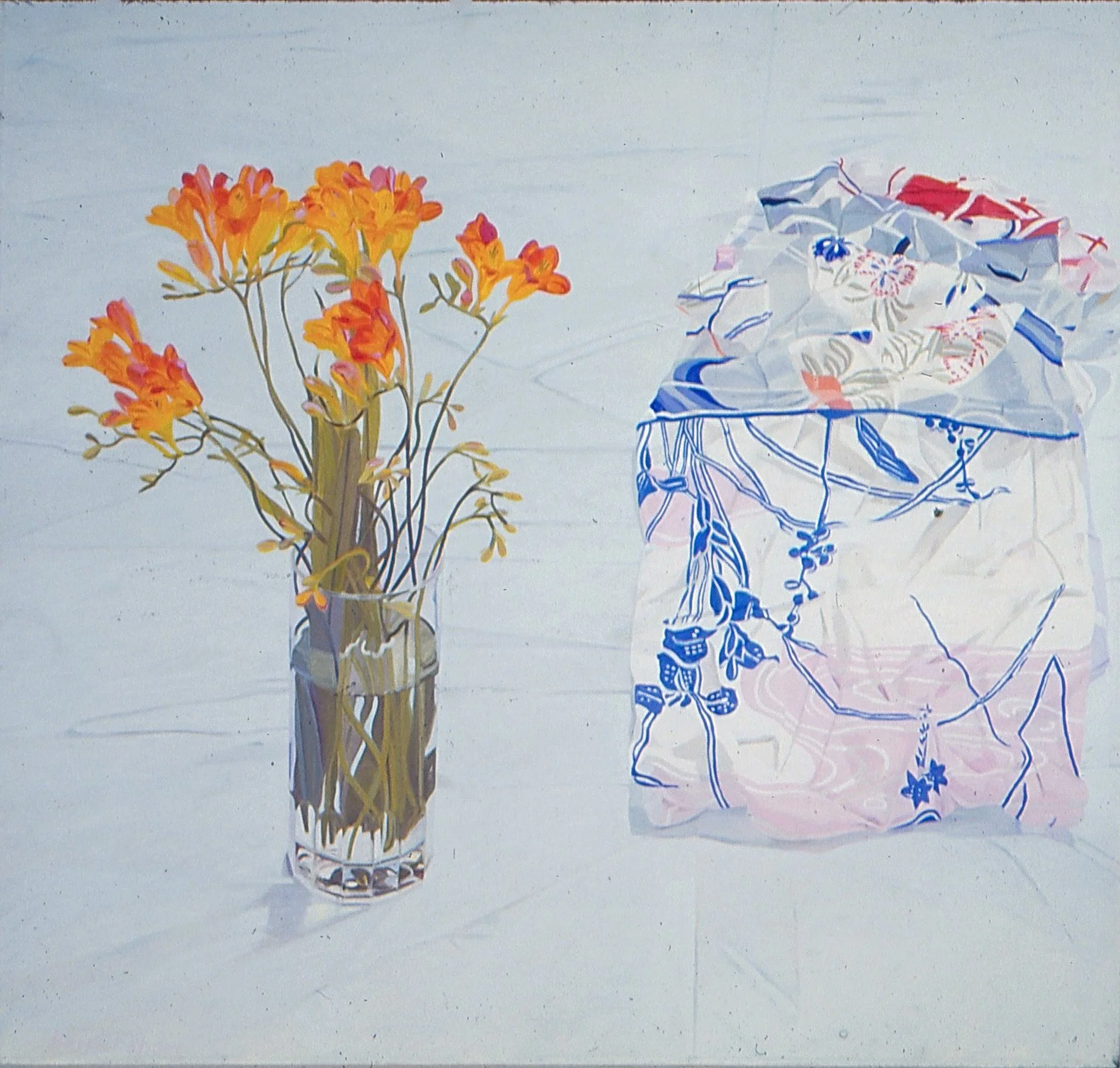
oil on canvas
60” x 64”
1977
Collection of Alexa, Manya, and Justine Bradley
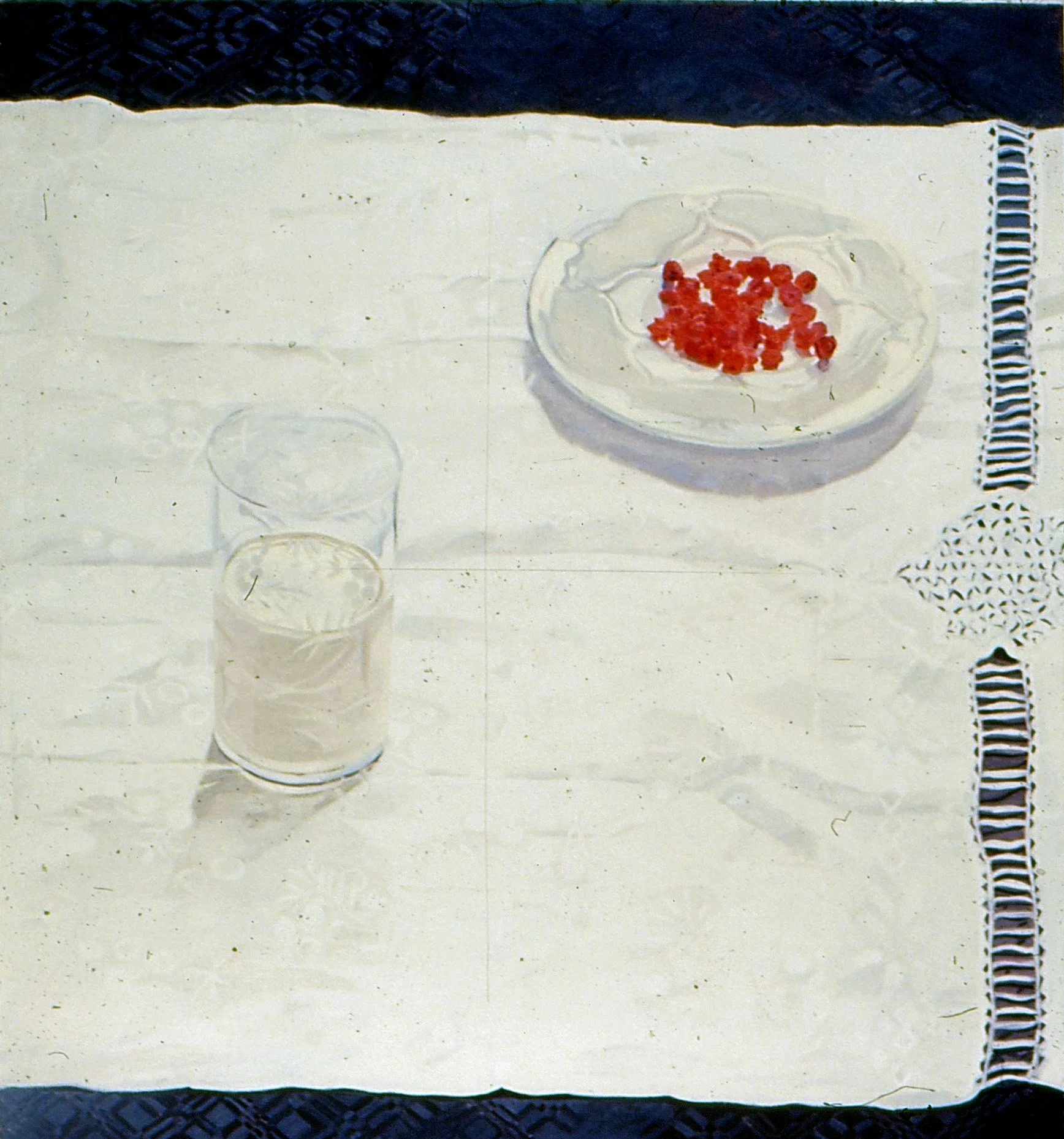
oil on canvas
60 × 50”
1977
Private collection
“The paintings continued to be about two forms and the character of the space between them. The glass of milk reappeared in a summer painting, juxtaposed with a plate of raspberries. The subtleties of the black on black and white on white of the ground were challenging.” Harriet Shorr, The Artist’s Eye: A Perceptual Way of Painting.
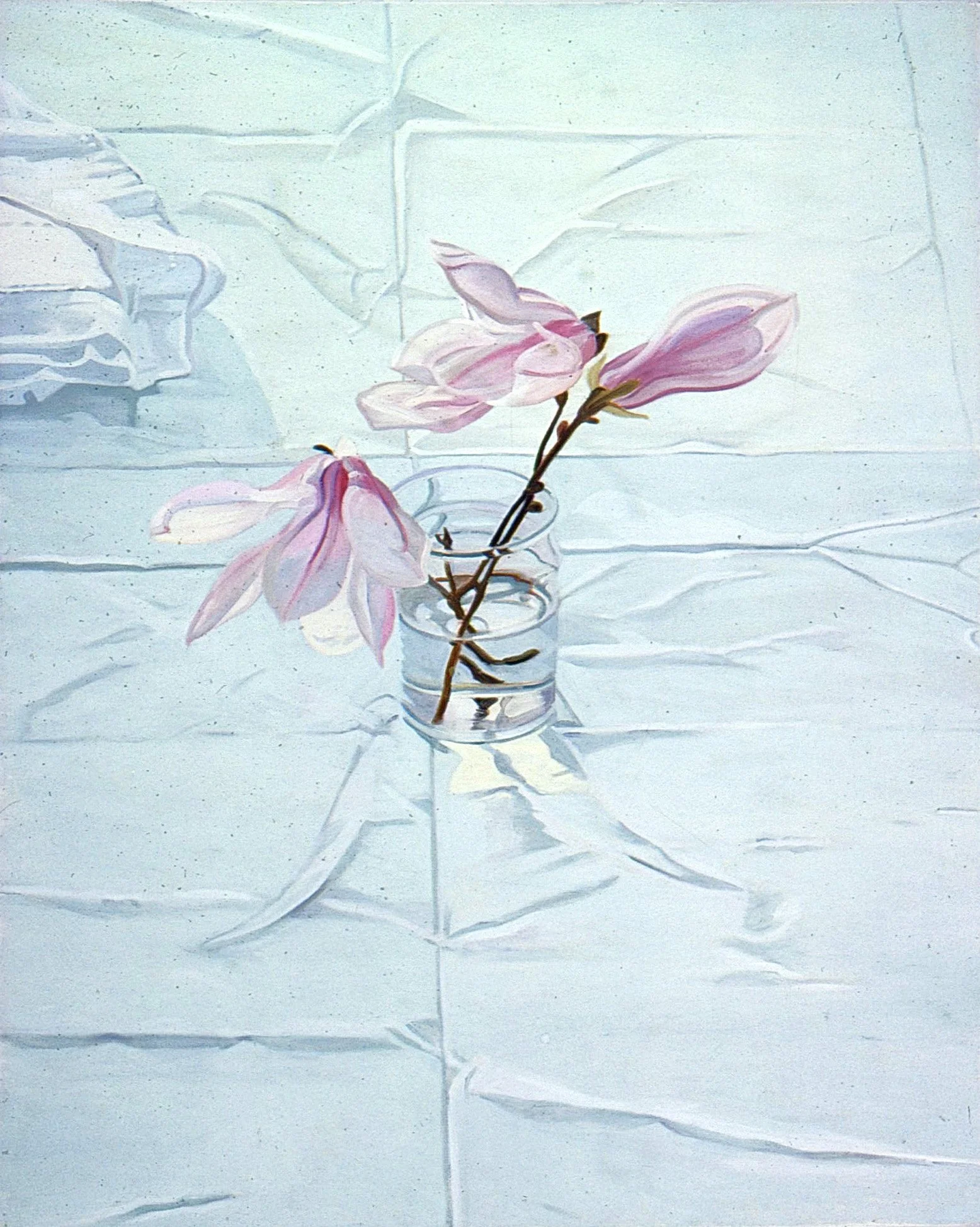
oil on canvas
60” x 50”
1976
collection of Jan Woodruff
“Magnolia was exhibited in a large comprehensive show of representational painting, and I felt even more strongly—when I saw it in another context—that the direction I had started in was the right one.” Harriet Shorr, The Artist’s Eye: A Perceptual Way of Painting.

oil on canvas
1972

oil on canvas
50” x 50”
1970

oil on canvas
30” x 40”
1967-68
collection of Emily McCully

one of the last paintings Shorr made
NFS